1.Our statement of intent
Drainage work involves sewage, deep chambers, high-pressure water, excavations and work near roads. Urgent Drainage Solutions Ltd is committed to carrying out every job in a way that protects our engineers, our customers, their neighbours and the public, and to meeting our duties under the Health and Safety at Work etc. Act 1974 and the regulations made under it.
Our director has overall responsibility for health and safety. Everyone who works for us has a duty to follow this policy, to look out for others and to stop work if something isn’t safe.
2.Planning the work: risk assessments and method statements
- We keep written risk assessments and method statements (RAMS) for each type of job we do, and share them with commercial clients on request.
- On arrival, the engineer carries out a site-specific check — access, traffic, the condition of covers and chambers, overhead and underground services, weather and who else is around — and adapts the plan or stops if needed.
- For larger jobs, such as excavations or relining, we plan the work in advance and agree it with you before we start.
3.PPE, hygiene and sewage
- Engineers are provided with suitable personal protective equipment — including gloves, eye protection, high-visibility clothing, safety footwear and waterproofs — and are trained to use it.
- We brief our team on the health risks of sewage, including leptospirosis (Weil’s disease), and on washing and decontamination. Vans carry hand-washing supplies and first aid kits.
- We contain dirty water and debris, clean up after the job and leave the area safe and tidy.
4.Manholes, chambers and confined spaces
- Covers are lifted with proper lifting keys and safe manual-handling techniques, never with bare hands.
- Open chambers are guarded with barriers or covers at all times and never left unattended.
- Most of our work is done from ground level with rods, jetting hoses and cameras. We don’t enter sewers, deep chambers or other confined spaces unless the task has been specifically planned, the people involved are trained and equipped for it, and the right controls — such as gas monitoring and a second person at the surface — are in place.
5.High-pressure water jetting
- Jetting equipment is only used by trained operatives and is checked before use.
- We use the pressure and nozzle that suit the pipe, and follow recognised industry guidance, such as the Water Jetting Association’s codes of practice.
- Hoses and work areas are managed to protect people nearby from spray, trip hazards and contaminated water.
6.Excavations and underground services
- Before we dig, we check utility records where available and scan for buried cables and pipes, following the HSE’s guidance HSG47, Avoiding danger from underground services.
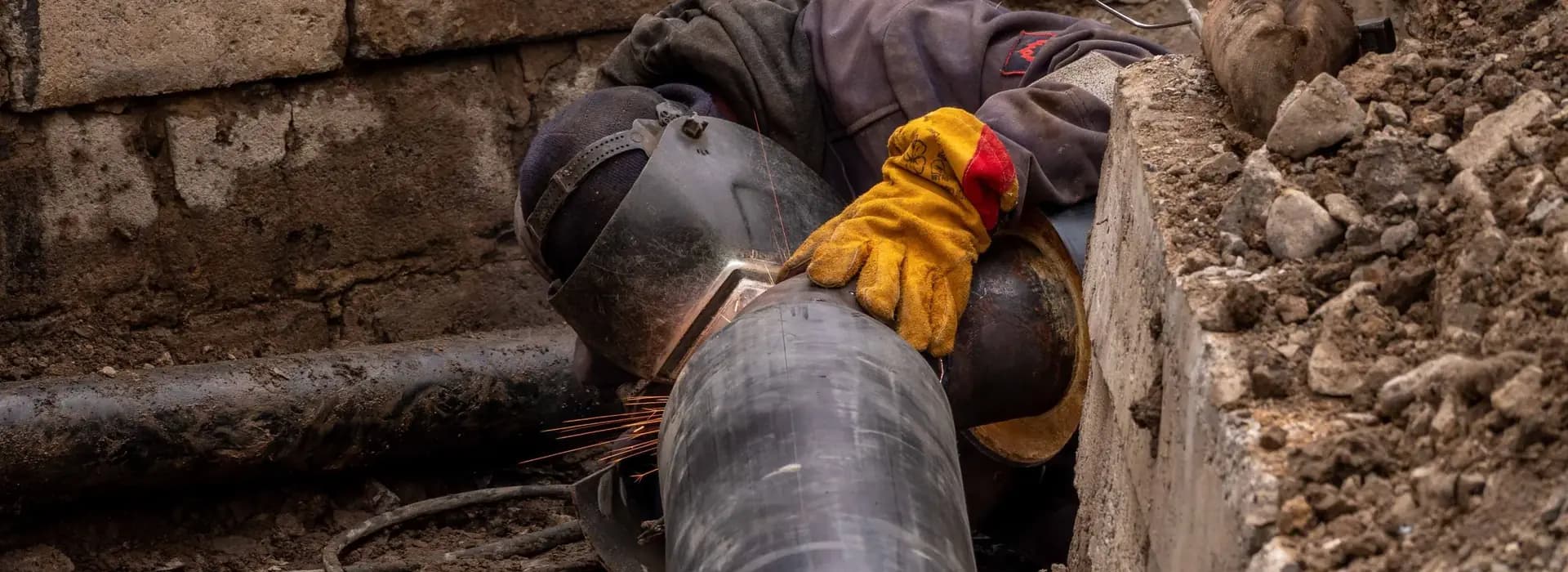
- Trenches are supported or battered back where needed, protected with barriers and kept clear of spoil and plant.
- Work on or next to a public road is planned with suitable signs and traffic management, and with the permissions the highway authority requires.
7.Hazardous substances (COSHH)
- We assess the substances we use — such as cleaning agents, drain-cleaning chemicals and relining resins — under the Control of Substances Hazardous to Health Regulations, keep safety data sheets and use the least hazardous option that will do the job.
- We never mix drain chemicals, and we will always ask what has already been poured down a drain before we start.
- If we suspect asbestos (for example in old pipework or cement fittings), we stop and advise on safe testing and removal.
8.Working at height (gutters and roofline)
- We follow the Work at Height Regulations 2005 and avoid working at height where we can — for example by clearing gutters from the ground with vacuum poles.
- Ladders are only used for short, low-risk tasks, on firm and level ground, with the ladder inspected before use and secured or footed.
- Where work can’t be done safely from a ladder or from the ground, we use suitable access equipment or advise that scaffolding is needed.
9.Lone working
- Engineers working alone keep in regular contact with the office, and we know where they are and when they expect to finish.
- Tasks that need two people — such as lifting heavy covers or confined-space work — are never attempted alone.
- Engineers can leave any situation where they feel unsafe, including aggressive or threatening behaviour, without question.
10.Vehicles, tools and equipment
- Vans, jetters, cameras and power tools are maintained, inspected and serviced in line with manufacturers’ instructions.
- Defective equipment is taken out of use until it is repaired.
- Loads are secured and drivers are expected to drive safely and legally.
11.Training and competence
Everyone receives an induction, job-specific training and supervision until they are competent for the work they do, with regular toolbox talks to keep safety front of mind. We only use subcontractors who can show they work safely and are properly insured.
12.Keeping customers and the public safe
- Please keep children and pets away from the work area while we are there.
- We tell you about any hazard we find — such as a damaged cover, a collapsing drain or a void under a path — and make it safe before we leave.
- If a job can’t be finished in one visit, we leave the site secure and explain what has been done and what happens next.
- If you’re dealing with a drainage emergency before we arrive, see our emergency drainage advice — never lift heavy manhole covers yourself.
13.Accidents, incidents and near misses
All accidents, incidents and near misses are recorded and investigated so we can stop them happening again. Where the law requires it, we report incidents to the Health and Safety Executive under RIDDOR. Anyone can raise a safety concern with us at any time — we would always rather hear about it.
14.Review
We review this policy at least once a year, and whenever our work, equipment or the law changes. The date at the top shows when it was last reviewed. Signed on behalf of Urgent Drainage Solutions Ltd by its director.
Questions about this page?
Call 07300 600 950 or email info@urgentdrainagesolutions.co.uk.